

The Road Home
The Other Side of the Stage
It was Friday, September 13, 2002, sometime around five o’clock in the afternoon, when my best friend Debbie and I decided we were going to the New Hampshire Highland Games at Loon Mountain. Not the following year. Not after weeks of planning. That weekend.
We had no reservations, and finding a hotel room during Highland Games weekend at the last minute was next to impossible. So we decided to camp.
Debbie was undergoing her second round of treatment for breast cancer. We had plenty of reasons to stay home and be sensible. Apparently, neither of us was particularly interested in being sensible.
We packed what we needed, loaded the car, and headed north toward New Hampshire’s White Mountains. By the time we arrived at Blueberry Mountain, it was dark. The campground was packed.
We were trying to figure out whether there was anywhere left to pitch our tent when we noticed something strange. Three different cars slowed down near the same campsite, seemingly considering it, before driving on. We couldn’t understand it. Why would anyone pass up an available campsite when the campground was full? Then we saw the number—13.
And suddenly it dawned on us. It was Friday the 13th. Debbie and I looked at each other and burst out laughing.
Thirteen was a lucky number for both of us. What everyone else apparently wanted to avoid was exactly what we’d been hoping to find.
We parked the car and set up our tent in the dark. We’d come nearly three hours, with practically no planning, to spend the weekend at the Highland Games.
And somehow, we’d landed in campsite 13 on Friday the 13th. We thought it was hilarious. We thought we were the luckiest women in New Hampshire.
And we had no idea how much that weekend would come to mean to us.
The Years Between
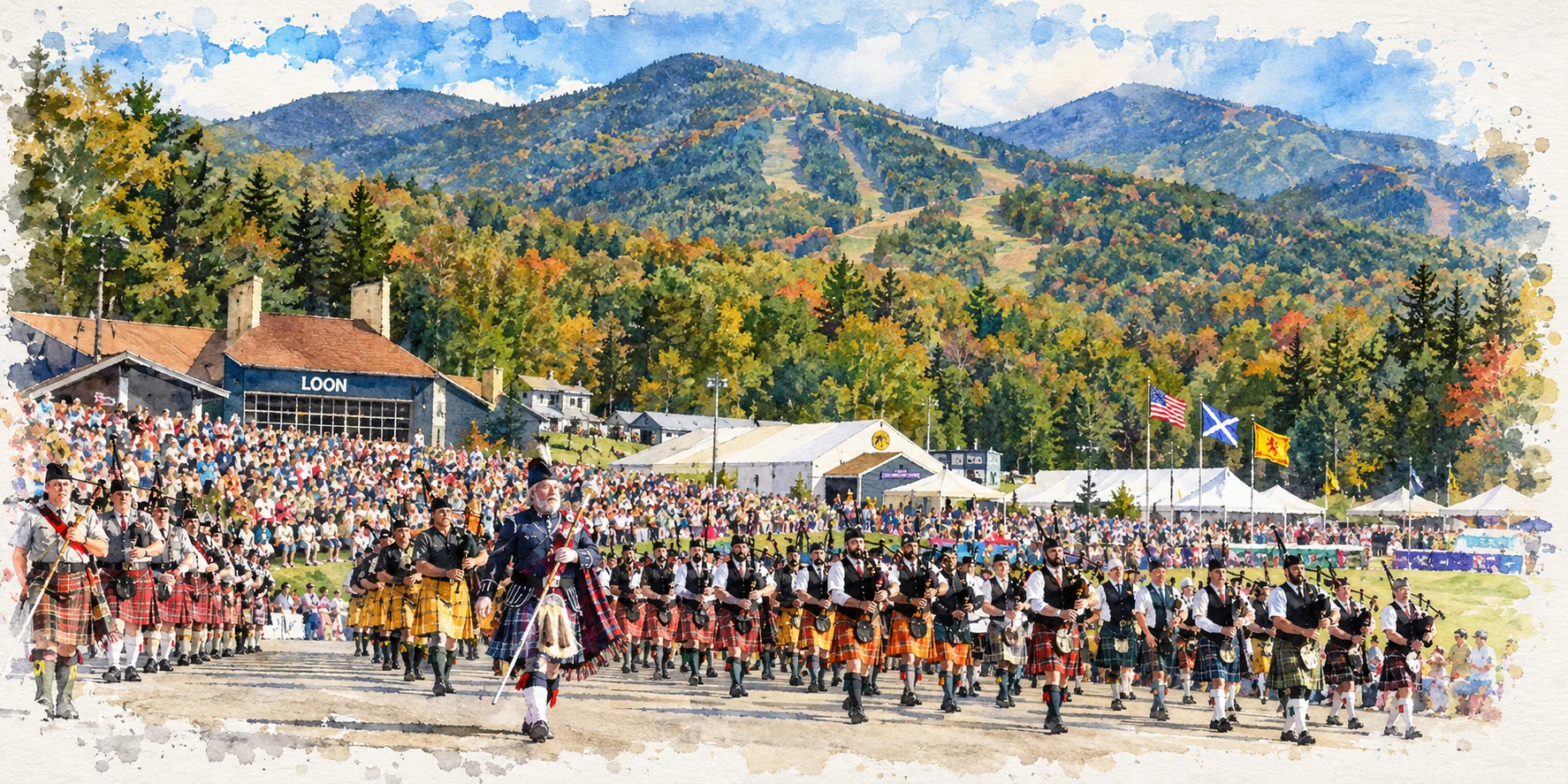
The following morning, we went to the Highland Games at Loon Mountain. Somewhere among the pipes, the crowds, the vendors, and the music, we encountered a band called the Glengarry Bhoys.
I remember being absolutely fascinated by Shelly, who could play the fiddle and step-dance at the same time. I’d never seen anything quite like it.
Debbie and I loved the band immediately. We bought a copy of their current album, Juice, from the merchandise table because we wanted the music we’d just heard to come home with us. And it did.
That weekend became one of those memories that never really fades. We called it the best weekend ever.
Over the years that followed, the Glengarry Bhoys became part of the soundtrack of our friendship. We saw them whenever we could, following them to performances around New England. Those outings were our girls’ weekends, our opportunities to escape the ordinary responsibilities of husbands, children, work, and everything else that filled our lives. For a little while, we could simply enjoy ourselves.
And the music was wonderful. My husband Chuck loved the band, too.
I remember planning to see them at an Irish pub in Boston for my birthday, January 22. We were going to take the train into North Station and make a night of it. Then a nor’easter dumped nearly two feet of snow on us. So much for that birthday celebration.
But there were other performances, other afternoons, and other memories. One of the last was at a small Celtic festival in Grafton, Massachusetts, in 2005.
Debbie was very sick by then. But she wanted to see the Glengarry Bhoys. Chuck and I picked her up, and we went together.
I remember the three of us enjoying the music, and afterward, Debbie and Chuck getting their CDs autographed. They were both so excited.
It’s such a small thing, isn’t it? A signed CD. A few minutes with musicians after a performance. But those moments can become enormous when you look back at them from the other side of loss.
Debbie died on October 9, 2005.
She was 49 years old.
That afternoon in Grafton was the last time she saw the Glengarry Bhoys. I didn’t know it would be.
Someday, Scotland
For years, Debbie and I talked about going to Scotland. The Glengarry Bhoys were already taking fans on trips to Scotland and Ireland, and we dreamed of joining Zig, Graham, and the band on one of those adventures. We talked about it the way friends talk about things they fully intend to do someday.
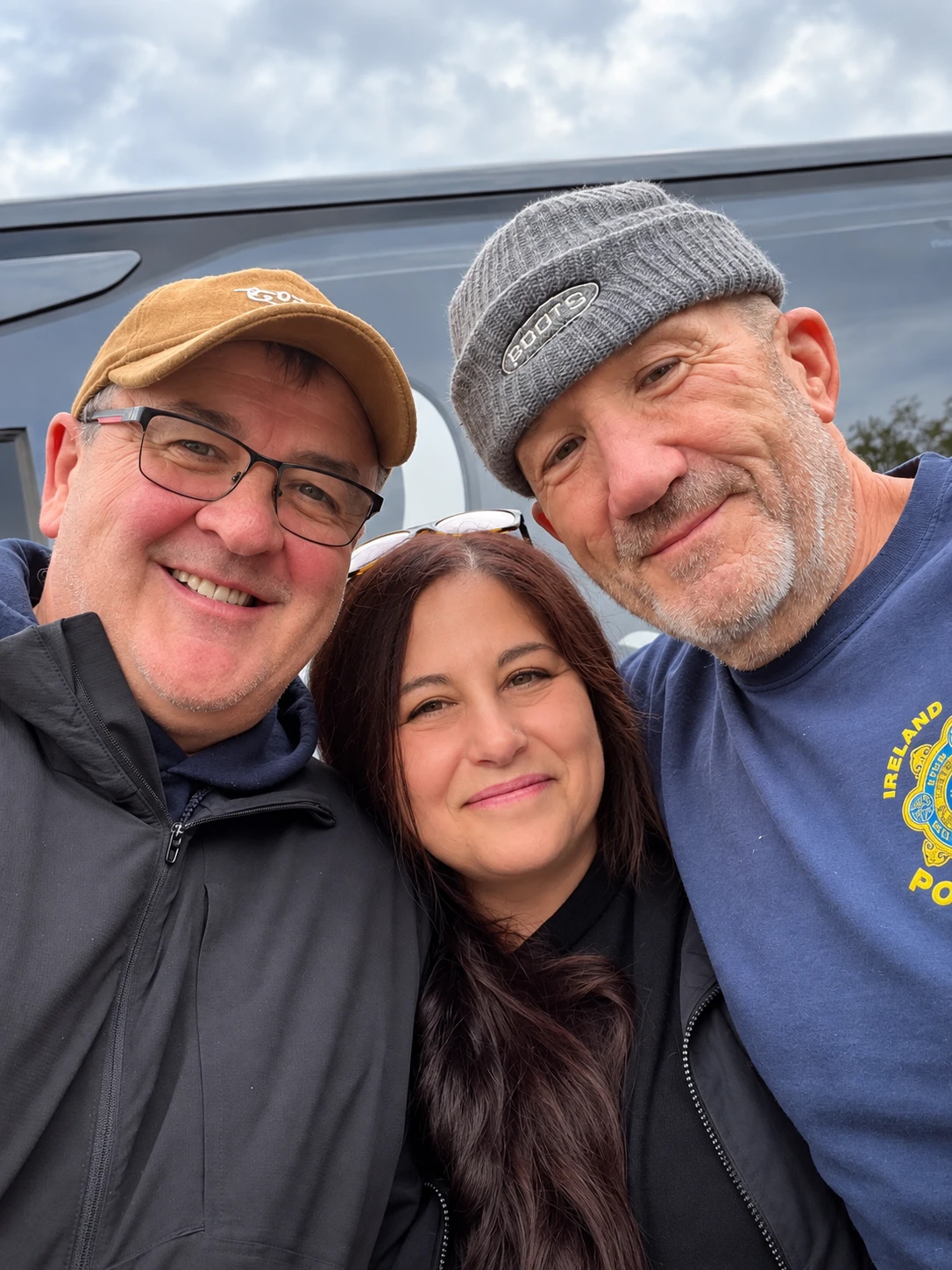
Someday we’d go. Someday we’d have the money. Someday we’d find the time.
We never got our someday.
Debbie died before we could make the trip.
It took me until 2022 to finally get to Scotland. By then, life had changed in ways I couldn’t have imagined when Debbie and I were laughing in that campground in New Hampshire. I’d lost my mother, my aunt, and my uncle in 2021. Chuck was ill.
I didn’t make the trip Debbie and I had originally imagined, traveling with Zig and Graham. But I made it to Scotland.
And I carried the memory of those conversations with Debbie along with me. Sometimes a journey takes twenty years longer than you planned. Sometimes you arrive carrying people who couldn’t come with you.
What the Band Never Sees
When I began working on the Glengarry Bhoys feature for CelticMFF Magazine, I contacted Zig Leroux to talk about the band’s history. I wanted to understand the years on the road, the music, the friendships, and the meaning of home.
Zig spoke about the band’s beginnings, about performing hundreds of shows a year, and about what those years had meant to the musicians who lived them. He also remembered Loon Mountain.
For the band, those performances were part of their own story, important moments in a career built on years of travel and hard work. For me, Loon Mountain was where Debbie and I discovered them. And suddenly I was looking at the same history from two completely different sides.
The musicians remembered the performance. I remembered the campsite, the laughter, my best friend, and the beginning of something that would stay with us for decades. It made me think about everything musicians never get to see.
A musician looks out from a stage and sees an audience. But every person in that audience is carrying an entire life. There are friendships, marriages, celebrations, illnesses, heartbreaks, and memories unfolding beyond the stage lights.
The musicians may never know what happened to those people after the show. They may never know which songs became part of a wedding, which performances became treasured family memories, or which recordings someone still plays years after losing a person they loved. They may never know how far their music traveled after everyone went home.
Different Roads, Same Music
One of the things that struck me while working on Zig’s interview was how much the musicians had given to the road. At times, the Glengarry Bhoys were performing more than 250 shows a year. That kind of schedule takes dedication. It also takes a toll. There are birthdays missed, family gatherings missed, ordinary evenings at home that never happen because there’s another show, another town, another stretch of highway.
And on the other side of the stage, there were people like Debbie and me. We were driving through New England to hear the music, making plans around performances, turning concerts into little adventures. While we were traveling to see them, they were traveling to reach us.
Different roads. The same music. And somewhere in the middle, lives intersected.
Debbie and I didn’t know what sacrifices the band was making to be there. The band didn’t know what those performances would come to mean to us. We were all simply living our lives. And somehow, those lives became connected.
Chuck is gone now, too. He died in August 2025.
I still have the memories of him and Debbie getting their CDs signed after that afternoon in Grafton. I can still picture how happy they were. And I still remember two women laughing in the dark because nobody else seemed to want campsite 13.
Those moments are part of my life. And the Glengarry Bhoys are part of those moments.
Here’s to the Roads We’ve Walked
At the end of our interview, I asked Zig what he would want to say to the people who had followed the Glengarry Bhoys over the years. His answer stayed with me:
“That we love yaz all and never once took your friendship for granted. If a GBs experience brings a smile to your face, even years from now, it will match ours.”
I don’t think he could have given me a more meaningful answer. Because here I am, more than twenty years after that first weekend at Loon Mountain, smiling through tears at the memories.
The campsite. Shelly and her fiddle. The CD we bought. The birthday concert that never happened because of a snowstorm. That last afternoon in Grafton. The trip to Scotland Debbie and I never got to take together. All those little pieces of a life.
And somewhere on the other side of those memories are musicians who were simply doing what they loved. They may never know what their music became to the people listening. But sometimes, if we’re lucky, we get the chance to tell them.
Earlier this year I wrote a song called Here’s to the Roads We’ve Walked. I didn’t know then how closely it would come to reflect the stories I’m telling now. It’s about the roads we travel, the things we give up along the way, and the people and experiences that stay with us.
It’s for the musicians who spent so many years traveling to bring their music to us. It’s for the people who traveled to hear them. And it’s for Debbie and Chuck. For Zig, Graham, and the Glengarry Bhoys. For everyone who has ever looked back on a moment and realized that something ordinary had become extraordinary.
Sometimes the people who made the music never learn how far it traveled. This time, I wanted them to know.
Listen
Here’s to the Roads We’ve Walked
An original song by Laureen MacBradaigh, written as a companion to this essay and dedicated to the musicians and listeners whose lives have crossed along the way.
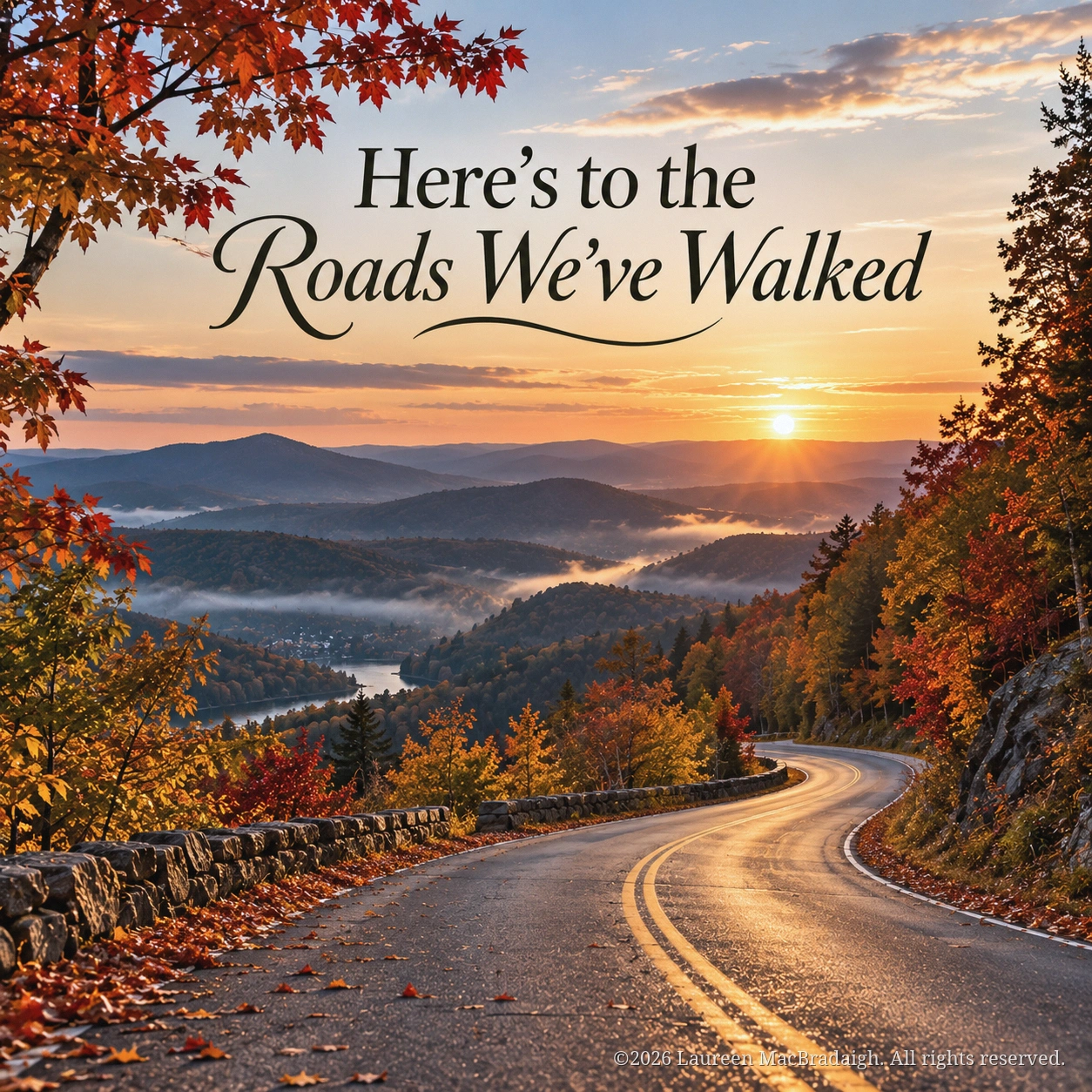
Here’s to the Roads We’ve Walked ©2026 Laureen MacBradaigh. All rights reserved.
Here’s to the roads we’ve walked.