

Geography and What We Call Home

For Japanese musician Kozo Toyota, Irish traditional music became more than a genre to learn. It became a way of thinking about family, cultural responsibility, and the unexpected places people find room for one another.
It began with a tin whistle.
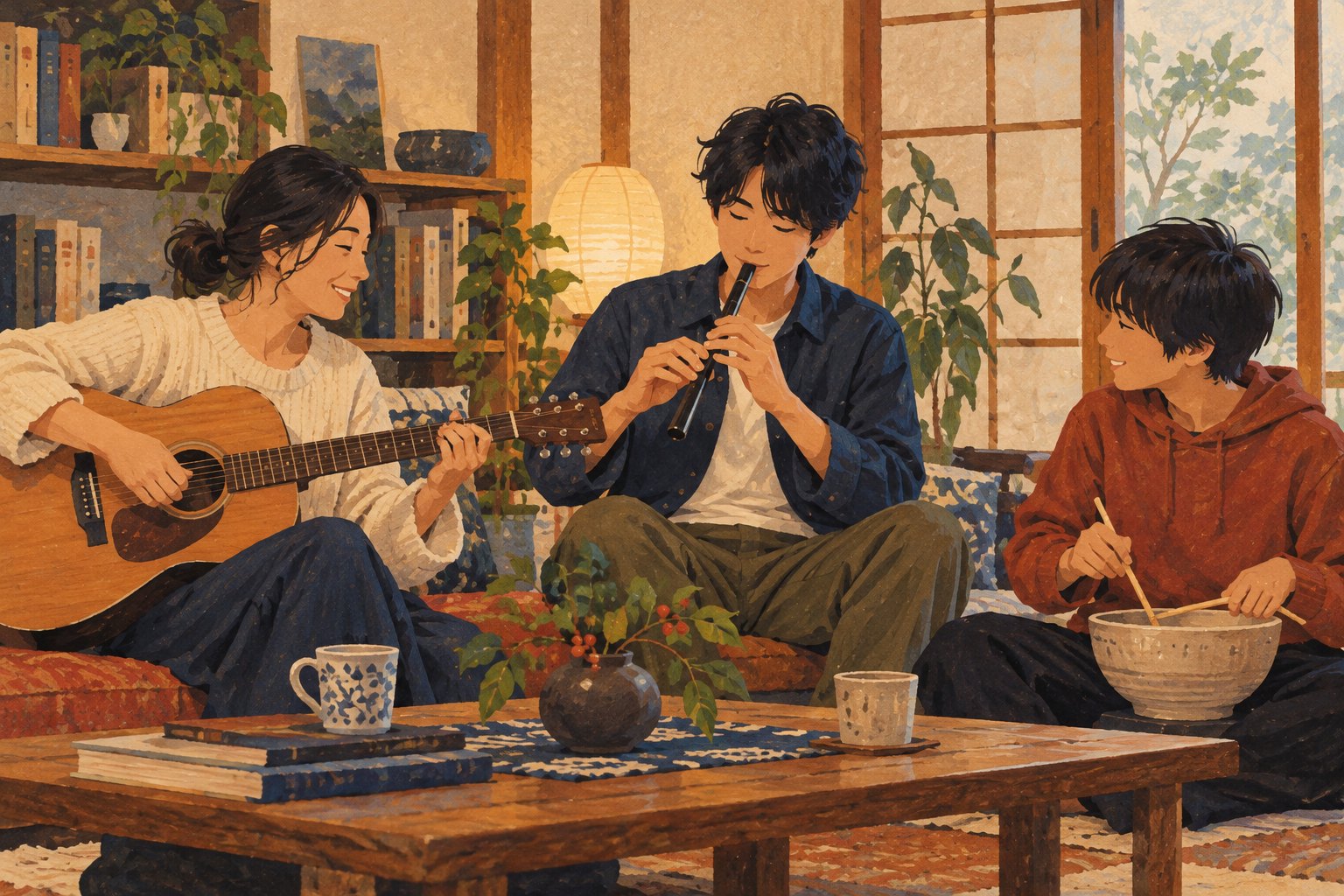
Kozo Toyota was at home in Japan, practicing Irish traditional music on his own, when something unexpected began to happen. His mother picked up a guitar and started accompanying him, drawing on musical skills she had learned years earlier. Before long, his younger brother joined them, tapping a bowl with chopsticks to provide percussion.
Nobody had planned it. Nobody had arranged the music. There was no audience, no performance to prepare for, and no special occasion that required them to gather.
They simply did.
Each member of the family had musical experience, but their instruments, interests, and musical histories were different. Until then, they had never found themselves making music together.
“I was surprised that this began to happen so spontaneously,” Toyota recalls.
The moment matters not because Irish music had found its way to a home in Japan, but because it revealed something Toyota has spent years understanding: some musical traditions do more than give people songs to learn. They give people a way to enter the room.
For Toyota, Irish music made space. It allowed a mother, a son, and a younger brother—with different skills, different instruments, and no shared repertoire—to discover a musical language together.
For a Christmas issue shaped around the idea of Coming Home, it is a quietly powerful image: a whistle, a guitar, a bowl played with chopsticks, and a family realizing that they have something to say together.
The Doorway in the Wind
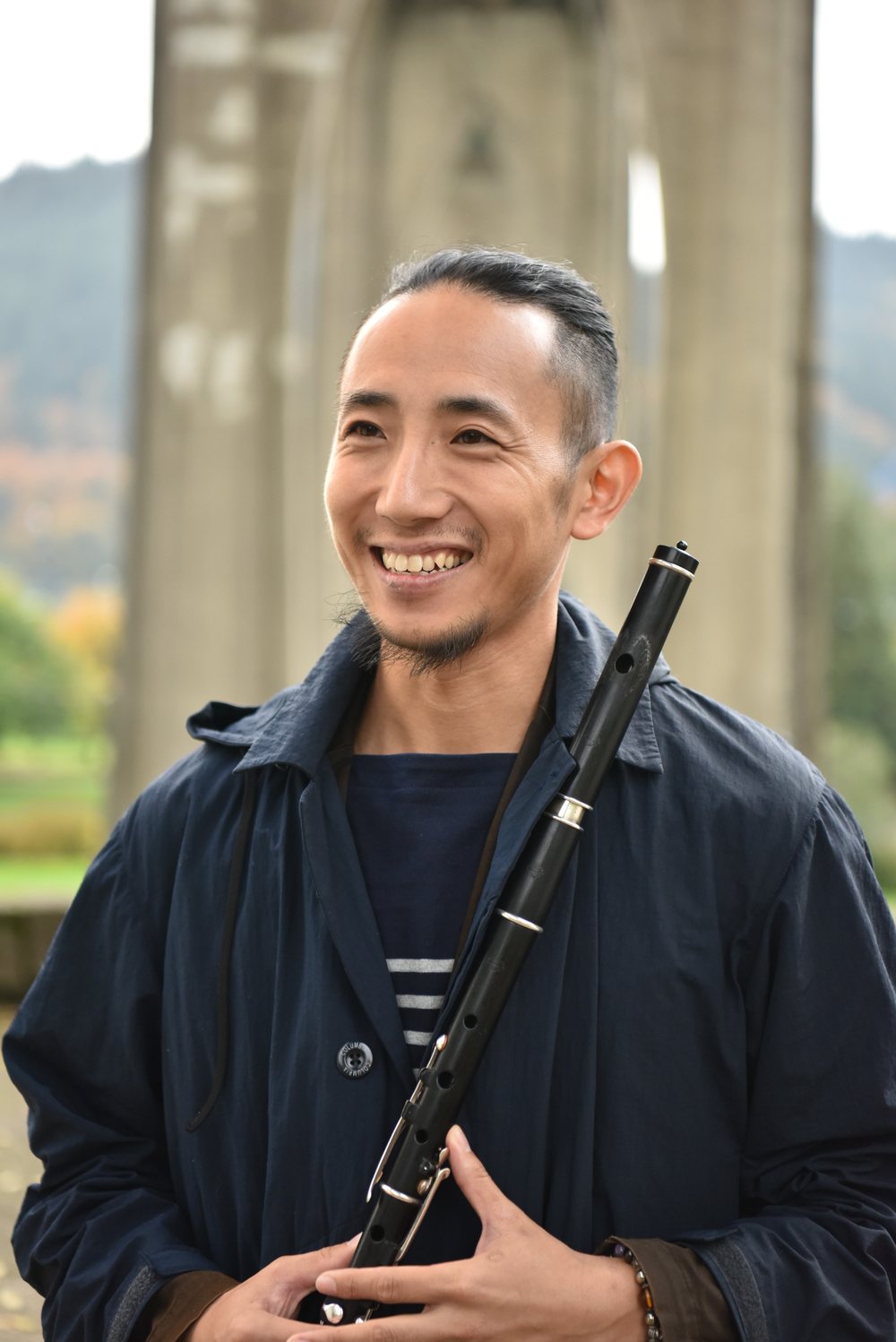
Toyota’s path toward Irish traditional music did not begin in Ireland—or even with Celtic music.
As a child, he was drawn to the sounds of old America: bluegrass, country, and old-time music he encountered at Tokyo Disneyland and later heard on cable radio. The first film he remembers seeing was Back to the Future Part III, where the music and a scene of people dancing to live musicians made a lasting impression.
That image stayed with him. Years later, he would recognize its influence on his own involvement in Irish set dancing: the pull not only of a tune, but of people gathering around music and moving together.
At university, where he studied ethnomusicology, Toyota’s curiosity widened. He explored Japanese traditional music, Indonesian gamelan, Indian sitar, Brazilian samba, and other musical forms. Around the same time, the word “Celtic” began to appear in his life through Titanic, Enya, Riverdance, and even background music played in MUJI stores.
Then, at a local record shop, he heard Live in Palma by the Irish traditional band Dervish.
“The experience was a revelation,” he says.
Some elements reminded him of the old American music he had loved as a child. But other qualities drew him in precisely because they felt different: minor-key tunes and the strong presence of wind instruments.
Toyota had played trumpet in school wind ensembles and orchestras since junior high school. The sound of whistles, flutes, and other wind instruments felt immediately familiar in a way that fiddle or banjo had not.
That familiarity became a doorway—but not an easy or uncomplicated one.
The Generosity of the Session
What captivated Toyota was not simply the sound of Irish music. It was the way the tradition seemed to live.
Irish traditional music, he says, was not separated from everyday life. It was not simply preserved for formal performance, contained in a classroom, or reserved for specialists. It remained a living tradition: passed between people, played socially, carried across generations, and still evolving in the present.
The family session that emerged around his whistle helped him understand why.
In classical music, Toyota observes, playing together as a family can be difficult. The rules and conventions are exacting, and relatives who feel no need to be diplomatic with one another may quickly find themselves correcting—or arguing with—each other.
Irish music can work differently.
A tune can stand on its own when played by one person. Another musician can join halfway through. Someone may step away before the tune is finished. And, Toyota notes, the distinction between a mistake and a variation can sometimes be so fine that it is difficult to point to one and call it a mistake.
Someone can join in halfway through or leave before the end.
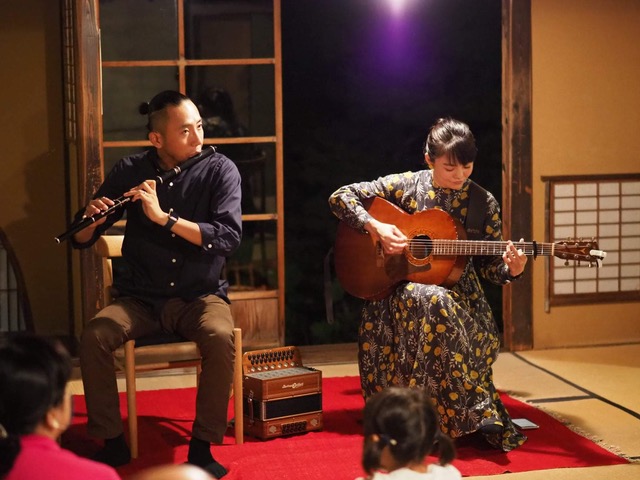
That flexibility is not carelessness. It is a kind of generosity.
It may help explain why Irish music has so often been sustained by siblings, parents and children, husbands and wives, and circles of friends. The tradition does not require everyone to arrive with the same degree of mastery before they are permitted to belong.
It makes room for people.
In Toyota’s family home, no one was trying to reproduce Ireland. They were discovering what this music made possible in their own lives.
The Active Relationship
For Japanese listeners, Irish music is not necessarily as distant as geography might suggest.
Toyota points to similarities between some scales used in Irish traditional music and those found in Japanese folk music. Certain older Irish and Scottish songs also entered Japanese school education about a century ago, giving many people a sense of familiarity that may be difficult to name.
Celtic sounds have also become part of the wider cultural atmosphere through films, television, retail music, and fantasy video-game soundtracks. A listener may recognize something emotionally before recognizing where it comes from.
For Toyota, however, familiarity has never meant that all boundaries disappear.
When asked whether Irish music has become part of his own musical language, he answers, in effect, both yes and no.
Irish music has become part of my own musical expression, but it does not define all of it.
There are still aspects of Irish music that feel unfamiliar or foreign to him. Yet there are also moments when he finds a stronger sense of personal expression in new compositions shaped by the spirit of Irish music than in traditional tunes themselves.
It is a thoughtful answer because it refuses the easy ending. Toyota is not claiming complete arrival inside another culture’s tradition, nor is he treating it as an exotic influence to borrow at will. His relationship with the music remains active: shaped by study, affection, humility, performance, and change.
That may be one of the most honest forms of cultural connection—not possession, but an ongoing relationship.
When History Is Listening
Toyota’s international performances have given him a rare perspective on how a musical tradition changes meaning from place to place.
In Japan, audiences may have little prior familiarity with Irish traditional music. A performance therefore involves more than playing well; it requires understanding which tunes will connect, when context is helpful, and how to invite listeners into a tradition they may be encountering for the first time.
“We see ourselves as translators,” Toyota says.
It is a revealing choice of words.
Translation is not imitation, and it is not ownership. It is the careful work of carrying meaning from one context to another without pretending that nothing is changed in the crossing.
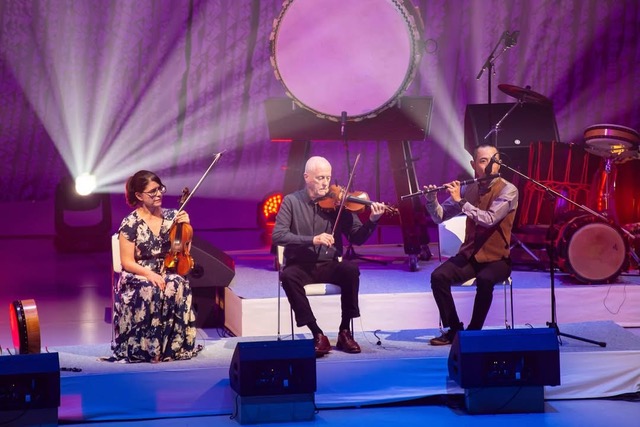
In the United States and Canada, Toyota often performs at Celtic festivals, where audiences tend to arrive with more familiarity and interest in the music. He finds that North American audiences often respond immediately to what they hear, judging a performance on its own musical and emotional impact.
That can create a different kind of freedom.
In Ireland, the relationship is different again. Audiences carry a deep awareness of the music’s history, place, and origins. Toyota approaches those performances with a different mindset, conscious that respect for tradition is not an abstract idea but something present in the room.
A tune does not arrive everywhere carrying the same history. In one place, the task may be introduction. In another, it may be direct expression. In Ireland, history itself is listening.
That awareness does not diminish Toyota’s connection to the music. It gives it integrity.
The Music We Make Together
Home is often described as a place of return: the house remembered, the town left behind, the people gathered again at Christmas.
But Toyota’s story suggests another meaning.
Home can also be an atmosphere. It can be the place where people are not required to be identical before they are allowed to belong. It can be created when someone begins a tune, another person recognizes an opening, and someone else joins with whatever they have at hand.
Irish music did not erase Toyota’s earlier musical life, his Japanese identity, or the many traditions he had studied before it. It entered into conversation with them. It gave him a way to make music with his family, to perform for audiences across continents, and to keep asking what it means to respect a tradition while allowing it to speak honestly through his own hands.
Years after those first whistle practices at home, the image remains beautifully simple: a mother with a guitar, a brother with chopsticks and a bowl, and a musician discovering that a tradition can travel far without losing its power to gather people close.
Perhaps that is how traditions endure. Not only through preservation, but through participation. Not only in concert halls, festival stages, and crowded sessions, but in kitchens and living rooms—where someone starts a tune, someone else decides to join, and for a while, everyone is home.