

Christmas, Half a World from Home
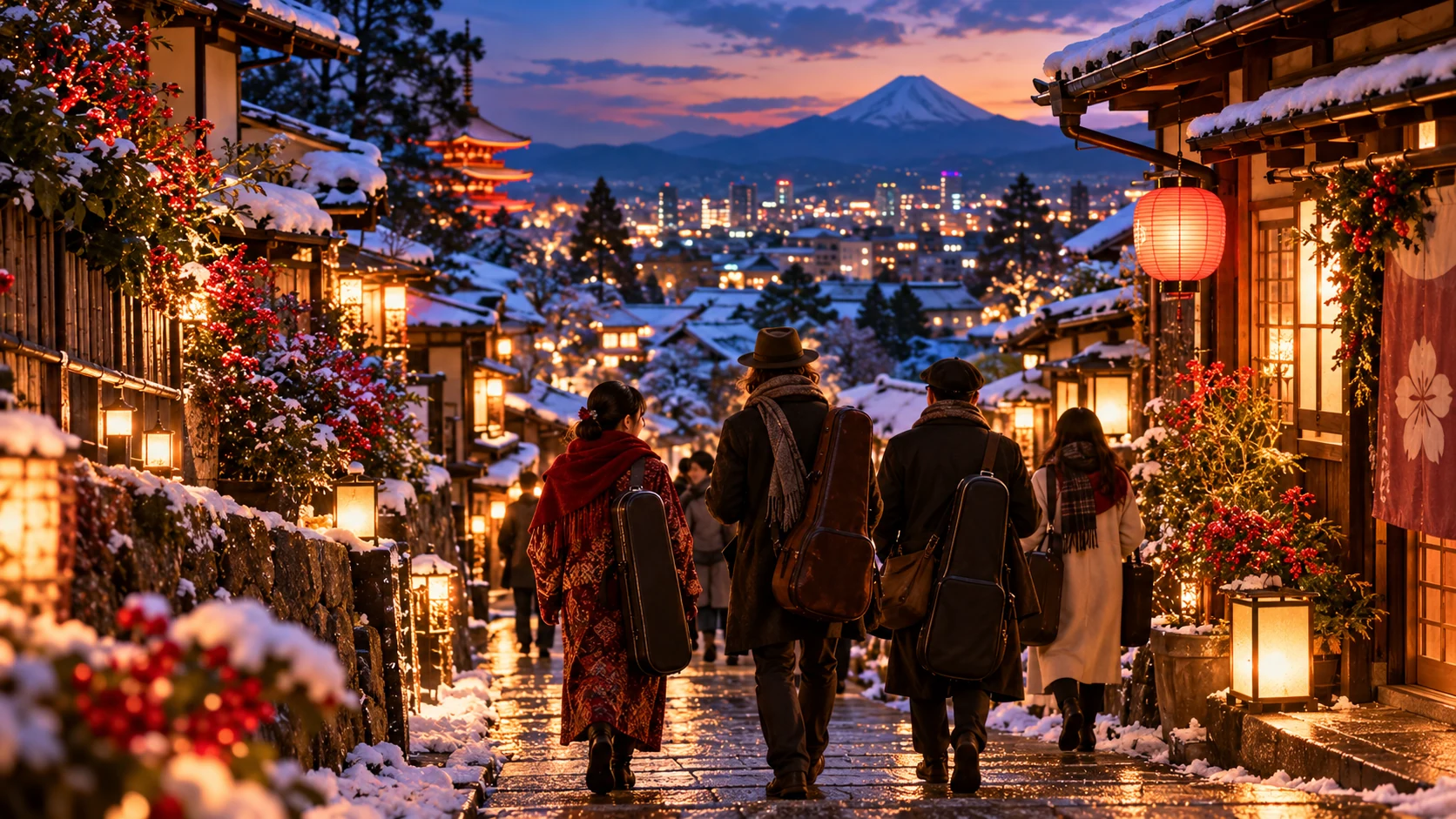
In Japan, winter traditions have traveled, changed and found new places to belong.
On a December evening in Tokyo, an Irish fiddle will sound considerably closer to home than geography suggests.
This Christmas, Altan and Solas are scheduled to take the stage at Sumida Triphony Hall as part of Celtic Christmas 2026. There will be Donegal fiddle music, Irish song, dance and musicians whose traditions began thousands of miles from Japan.
Earlier in the afternoon, Japanese flute player Kozo Toyota is scheduled to host a talk-and-session program in the small hall, with one segment on sean-nós singing and another on regional differences within Irish traditional music.
Elsewhere on the tour, Japanese musicians will join their visiting counterparts in workshops and sessions. The festival’s December itinerary includes Aichi, Saitama, Hyogo, Fukui and Tokyo.
For Japanese promoter Plankton, Celtic Christmas is not a novelty imported for a single holiday season. It is a returning winter celebration.
There is something worth considering in that.
Because Celtic Christmas is not happening in Dublin, Glasgow or Halifax.
It is happening in Japan.
And perhaps that makes Japan one of the most interesting places to think about what a tradition actually is.
Winter Came First
Long before Christmas lights appeared in Tokyo, Japan already knew what it meant to mark the darkest part of the year.
Tōji, the winter solstice, falls around December 22, when the Northern Hemisphere reaches its shortest day. Traditional Japanese customs include eating kabocha squash and bathing with yuzu fruit floating in hot water. Both practices are associated with health and well-being through winter.
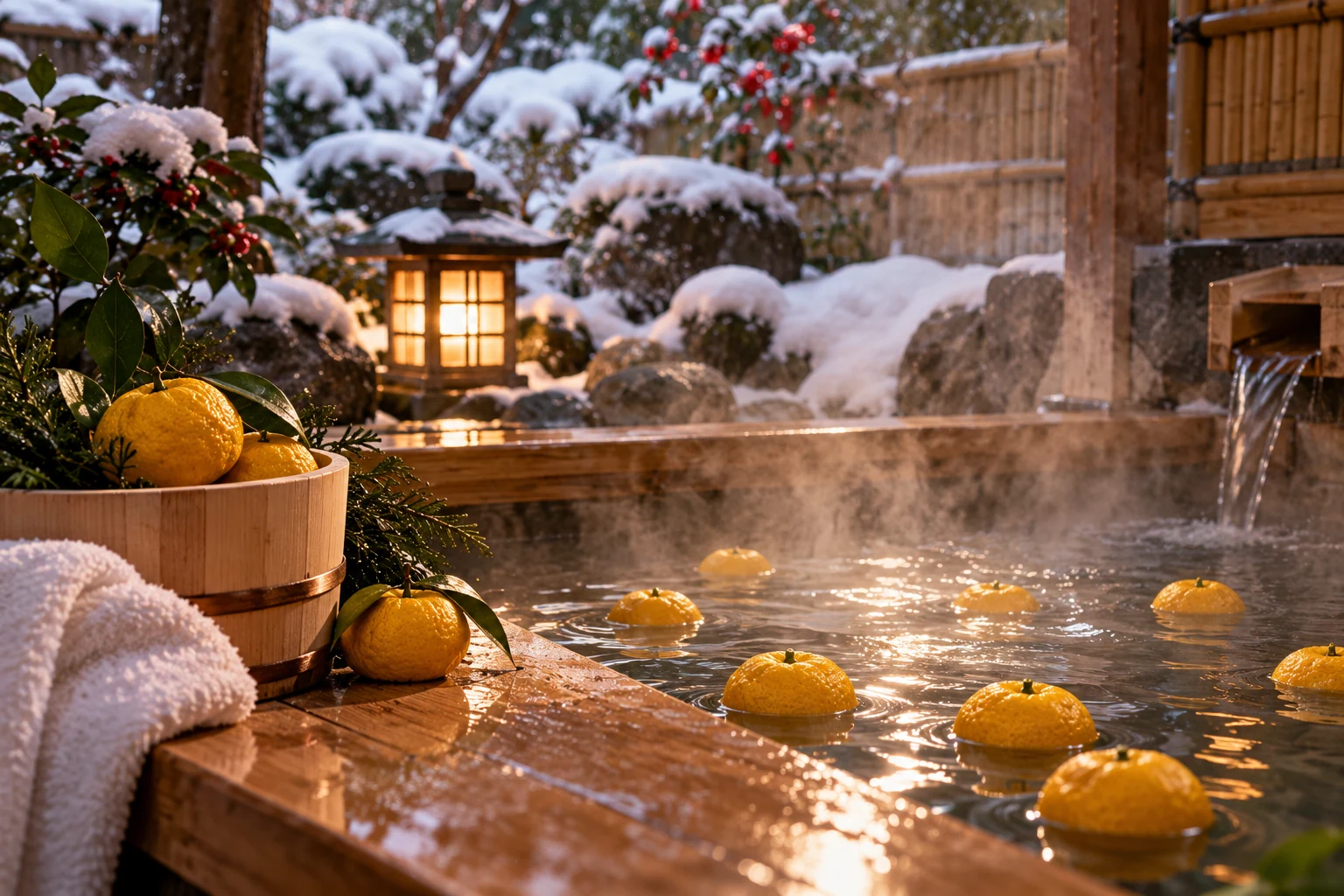
The customs themselves are Japanese.
But the human impulse behind them would be recognizable in many places around the northern world.
Winter changes life.
The light disappears earlier. Food matters differently. Warmth matters. People gather. They develop rituals around fire, food, health, protection, luck and the expectation that darkness will eventually give way to longer days.
Celtic cultures developed their own winter customs in entirely different historical and religious contexts. There is no need to manufacture a connection between them.
The similarity is simpler than that.
Human beings notice when the world gets dark.
And we find ways of answering it.
Then Christmas Traveled
Christmas came to Japan from somewhere else.
And Japan did what cultures have always done with things that arrive from somewhere else.
It changed it.
Christmas is not Japan’s principal family holiday. New Year holds far greater importance, when families gather and older traditions move to the foreground. Christmas itself is not a national holiday.
Yet Christmas is unmistakably present.
Cities fill with elaborate winter illuminations. Christmas cakes appear in shops. Friends gather for parties. Couples go out for Christmas Eve dinners and dates.
Fried chicken became such a familiar part of the Japanese Christmas landscape that what sounds to outsiders like an internet joke is an established seasonal custom.
Christmas markets have joined the landscape too.
Across Japan, European-style markets appear during the Christmas season, with illuminated trees, wooden stalls, seasonal foods and imported Christmas imagery set against unmistakably Japanese cities.
Yokohama, Tokyo, Osaka and other cities host their own versions of a tradition whose roots lie thousands of miles away.
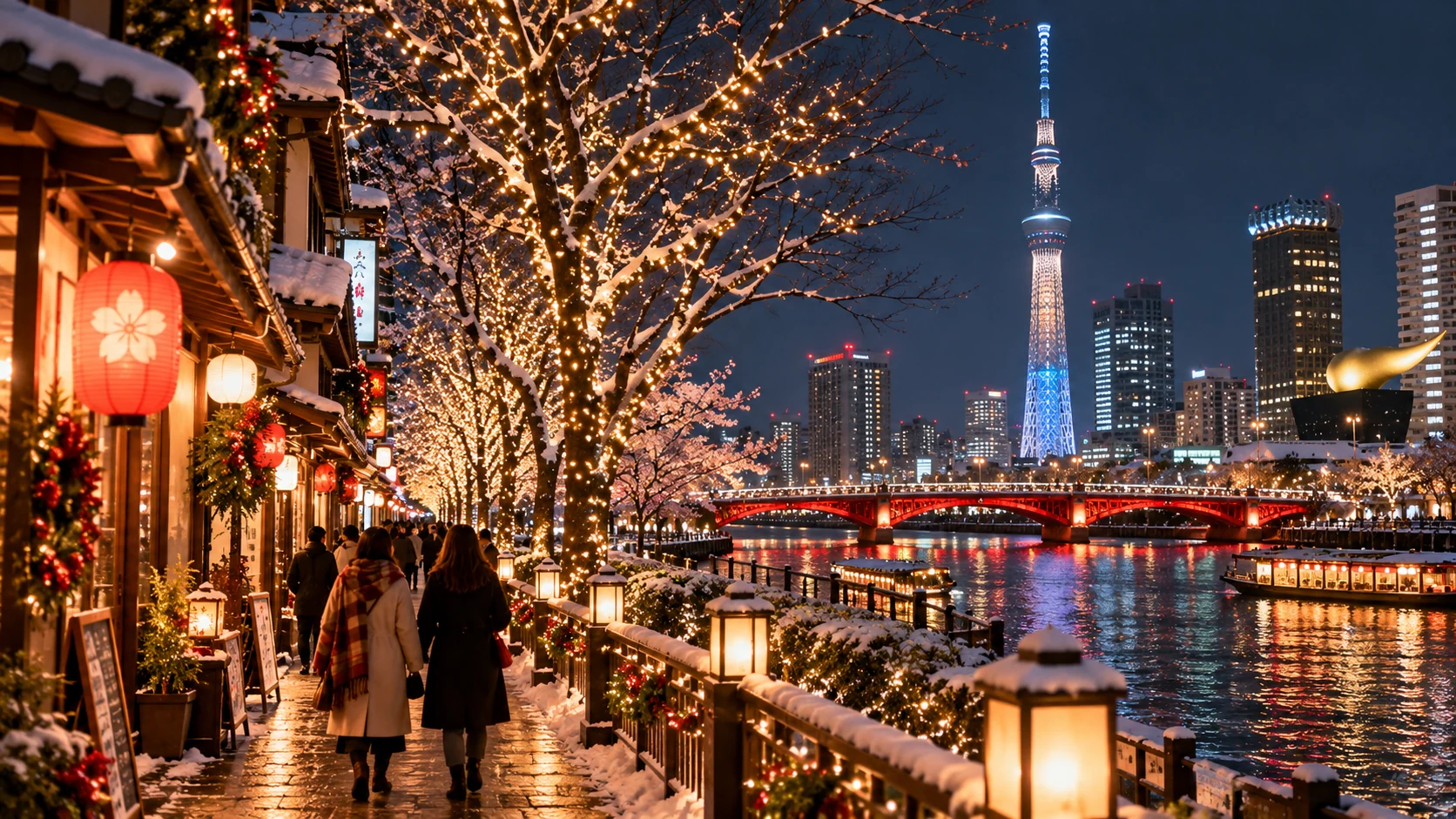
None of this belonged to Japan’s older winter traditions.
Now it is part of what December looks like for many people.
That is one of the fascinating things about watching a tradition travel.
First it looks foreign.
Then it becomes familiar.
Eventually, someone grows up remembering it.
And memory is one of the ways tradition begins.
December 25 Isn’t the End of the Story
Then Christmas passes.
Decorations begin disappearing almost immediately, and Japan turns toward the holiday that carries much greater cultural weight: New Year.
Families gather. Homes are prepared. Special foods return to tables. Shrines and temples prepare for enormous numbers of visitors.
Older Japanese traditions move back to the center of the season.
The imported celebration and the older traditions do not need to cancel each other out.
They occupy the same winter.
That is worth remembering whenever we talk about culture as though it were something that must remain unchanged in order to remain authentic.
Cultures have always borrowed, adapted, discarded, revived and reinvented.
Celtic cultures included.
When Music Crosses an Ocean
Throughout this edition of CelticMFF Magazine, we have been looking at things people carry.
Songs crossed the Atlantic with emigrants. Recipes survived because somebody remembered how a grandmother made them. Languages diminished and returned. Music moved into new communities and changed when it got there.
Usually, when we tell those stories, people carry the culture.
But sometimes the culture travels without them.
A recording crosses an ocean.
A touring musician walks onto a stage.
Someone hears a fiddle for the first time.
Something catches.
That happened in Japan with Irish traditional music.
Japanese musicians did not need Irish grandparents to hear something in it worth following.
Over decades, musicians, promoters, teachers and audiences have built communities around music that arrived from thousands of miles away.
The question is no longer simply how Celtic music reached Japan.
It is what happened after it arrived.
When does something that came from somewhere else become part of your own tradition?
Years of Celtic Christmases in Japan might be one answer.
A December Session in Japan
The planned Celtic Christmas 2026 program offers a particularly interesting picture of cultural exchange.
Altan represents a musical tradition deeply associated with Donegal. Solas was formed in the United States and developed a sound shaped partly by the Irish-American experience.
Now those musicians are traveling to Japan.
And they are not simply performing while Japanese audiences sit quietly on the receiving end.
The announced program includes talks, workshops and sessions in which Japanese musicians participate.
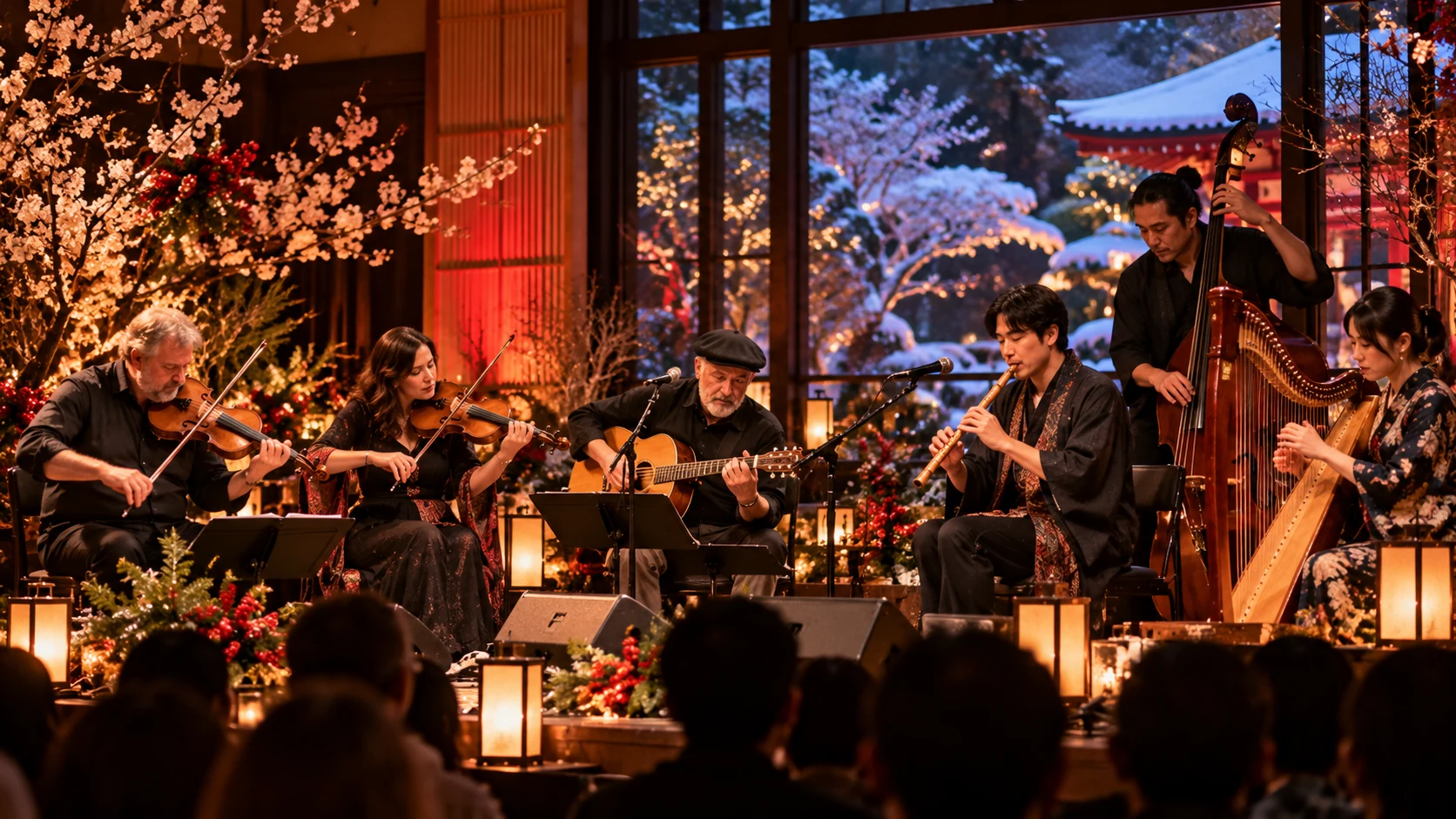
At the Saitama event in Tokorozawa, the day is scheduled to end with a large session involving visiting performers and Japanese musicians. Audience members who bring instruments are also invited to join.
Think about the route the music has taken.
Ireland to America.
Ireland to Japan.
America to Japan.
And then from Japanese musicians to other Japanese musicians who may never have been to Ireland at all.
At some point, trying to determine exactly who is carrying whose tradition becomes less interesting than watching people carry it together.
The Road to Japan
Celtic music did not suddenly appear in Japan with this year’s Christmas concerts.
The relationship goes much deeper.
Japanese musicians have been studying and performing Irish and other Celtic traditions for decades. Festivals, sessions, cultural organizations and academic communities have created places where those traditions can be encountered far from their geographic origins.
Kozo Toyota’s own path offers one particularly wonderful example.
Toyota says that what he first heard at Tokyo Disneyland was old American music, such as bluegrass, country and old-time music, and that hearing Dervish was what drew him to Irish music.
In an interview with Ontomo, he described hearing a Dervish recording at a CD-shop listening station early in university. That experience led him to begin listening to Irish music seriously.
Tokyo Disneyland.
A record shop.
Dervish.
A flute.
Years later, Toyota is helping introduce other people in Japan to the regional traditions of Irish music.
Culture traveled.
Then somebody picked it up.
Then he carried it farther.
Home Doesn’t Always Mean Where Something Began
That may be the piece Japan adds to our Coming Home issue.
Much of this edition is about the things people take with them when they leave home.
The musicians of Irish Christmas in America carry songs and stories across an ocean. The Glengarry Bhoys grew from Scottish and Irish traditions carried into Canada and made something unmistakably their own.
Those are stories of culture traveling with people.
Japan gives us the other side of the journey.
Sometimes the tradition arrives before you do.
You hear music made in a place you have never visited. You learn a dance your grandparents never danced. You celebrate a holiday your ancestors did not celebrate.
You encounter something that is unquestionably somebody else’s culture and find that it speaks to you anyway.
Respect matters. History matters. Knowing where something came from matters.
But culture has never survived solely because people protected it from change.
It also survives because somebody becomes curious.
Somebody learns the tune.
Somebody teaches the next person.
Somebody books the hall again next December.
And so, as another Japanese winter settles in, Tokyo’s illuminations begin to glow through the dark.
Christmas markets fill with people drinking something warm beneath decorations borrowed from another part of the world.
Families prepare for a Japanese New Year whose traditions reach much further back.
Somewhere, perhaps, someone is soaking in a hot bath scented with yuzu.
And when Celtic Christmas returns, musicians from Ireland, America and Japan will have another opportunity to meet.
Fiddles will come out.
Someone will start a tune.
Other musicians will join.
Nobody needs to pretend Tokyo is Donegal.
It isn’t.
That’s precisely what makes the scene interesting.
Thousands of miles from the places where these traditions began, people have chosen to make room for them.
Traditions survive because people keep choosing them.
Sometimes we carry them away from home.
Sometimes we discover them far from home.
And sometimes, after enough winters, something that once came from somewhere else becomes part of the way we mark our own.
Perhaps that is another kind of homecoming.
Not returning to the place where a tradition started.
Finding another place where someone has kept the light on for it.