

Christmas Behind the Gates at Balmoral

A Christmas gift, a Highland home, and the stories that endure
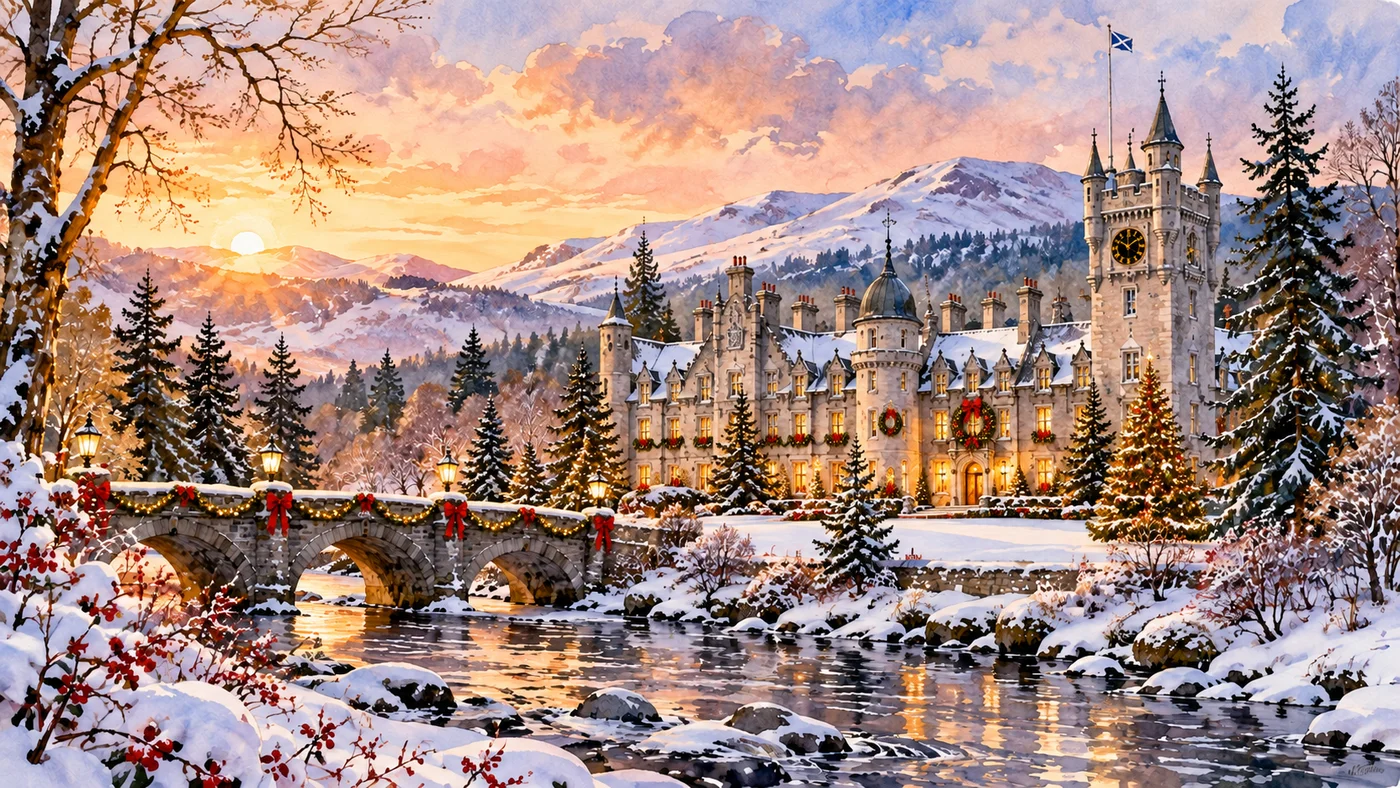
On Christmas Eve in 1848, Queen Victoria gave Prince Albert a rather unusual present.
It wasn’t a jewel, a piece of furniture, or an elaborate ornament for Windsor Castle. It was a painting of a place they had fallen in love with. Actually, there were two paintings: one depicting Balmoral Castle, the other the mountain of Lochnagar, rising above the Scottish Highlands.
The royal couple had visited Balmoral for the first time that September. They had walked its grounds, explored the surrounding countryside, and discovered a landscape that seemed to offer something their grander residences could not.
A place to escape.
Victoria commissioned the Aberdeen artist James Giles to capture the scenery, then presented the paintings to Albert among his Christmas gifts. In her journal that evening, she recorded his delight.
It is a small detail in a much larger royal history, but a wonderfully human one. They were celebrating Christmas at Windsor, hundreds of miles from Scotland, yet among their presents were images of the place they longed to return to.
Nearly 180 years later, Balmoral remains a place that inspires that same longing. And this Christmas, its gates are opening to visitors who want to experience something of that Highland world for themselves.
A Christmas Present from Scotland
The paintings reveal something interesting about the couple’s relationship with Scotland. Victoria and Albert had first visited the country together in 1842. By 1848, they had leased Balmoral, a modest Highland residence that would eventually become one of the royal family’s most cherished homes.
The original castle was nothing like the imposing granite building visitors recognize today. It was smaller, with a tower and gardens surrounded by woodland, hills, and the River Dee. Victoria was captivated. She described the scenery as wild without being desolate, and admired the wooded hills rising around the house.
The paintings Albert received that Christmas captured this earlier Balmoral, before the construction of the castle that would replace it.
The royal couple acquired the estate outright in 1852, and a new castle was completed in 1856. Designed in the Scottish Baronial style, it incorporated the turrets, towers, and architectural details that would become synonymous with Balmoral.
But its purpose remained remarkably domestic. For all its grandeur, Balmoral was intended to be a family retreat. Here, Victoria and Albert could spend time outdoors, explore the countryside, and enjoy a more informal existence than royal life ordinarily permitted.
The Highlands offered something precious: distance from the demands of the court.
And perhaps that is why a painting of Balmoral made such a meaningful Christmas gift.
It wasn’t simply a picture of a castle. It was a reminder of how they felt when they were there.
The Christmases They Spent Elsewhere
There is a curious twist to Balmoral’s Christmas story. Despite their affection for the estate, Victoria and Albert did not celebrate Christmas there.
Their Christmases together were spent at Windsor Castle, where the royal household embraced many of the festive customs associated with Albert’s German upbringing. Christmas trees, carefully arranged presents, seasonal greenery, and gifts exchanged on Christmas Eve became important parts of their family celebrations. The Royal Collection Trust records that the couple spent 20 Christmases together at Windsor.
Balmoral belonged to another part of their lives. It was where they escaped in other seasons, particularly during late summer and autumn.
And after Albert’s death in December 1861, just days before Christmas, it became one of the places most closely associated with Victoria’s memories of their life together. The Highland estate remained deeply personal to her.
There is something familiar in that attachment.
Most families have places like this. A childhood house. A favorite holiday destination. A kitchen where everyone gathered. A stretch of countryside visited year after year.
Sometimes the place itself matters less than the people who were there. And sometimes, long after those people are gone, returning becomes a way of remembering them.
For Victoria, Balmoral held an entire chapter of her life. The castle’s stones and surrounding hills became part of her family’s story.
Beyond the Castle Walls
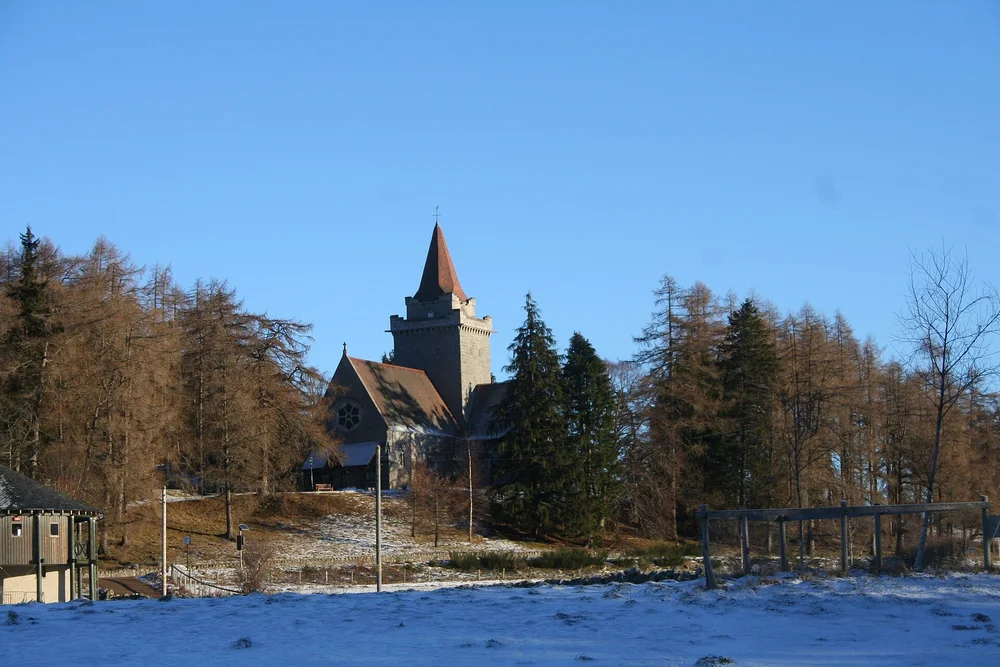
It is easy to tell Balmoral’s history entirely through the royal family. But the castle stands within a Highland landscape whose communities, traditions, and stories existed long before Victoria and Albert arrived. The surrounding district of Royal Deeside includes villages, farms, churches, and families whose histories stretch back centuries.
And just beyond Balmoral’s gates stands one of the most interesting places in that story.
Crathie Kirk.
The present church, completed in 1895, is closely associated with the royal family. Victoria attended an earlier church on the site, and successive generations of royals have worshipped there alongside local parishioners.
Yet the religious history of Crathie reaches much further into Scotland’s past. Local tradition tells of early Celtic Christian missionaries who came to Deeside. One was St Colm, associated with the sixth century. Another was St Monire, who, according to tradition, baptized converts in the River Dee during the eighth century. The nearby ruins of an older church dedicated to St Monire remain a reminder of those earlier generations.
These accounts belong partly to local tradition rather than fully documented history, but they reveal something important about the landscape. Balmoral did not create the cultural world around it. It became part of one that was already there.
The royal family’s relationship with Crathie Kirk also illustrates a quieter side of Balmoral’s history. For all the distinctions of monarchy, the church has long been a place where members of the royal household and their Highland neighbors share a common space.
In the old churchyard lie generations of local people, including some who served Queen Victoria. Among them is John Brown, the Highland attendant whose companionship became so important to her after Albert’s death.
Their stories belong to Balmoral, too.
The Cottage With an Unexpected History
One of Balmoral’s most intriguing buildings is not the castle at all. It is a cottage associated with a man who arrived in Britain from India in 1887 and became one of Queen Victoria’s closest companions.
Abdul Karim was initially brought to Britain to participate in the Queen’s Golden Jubilee celebrations. Over time, his relationship with Victoria developed into something much more significant. She appointed him her Munshi, or teacher, and he instructed her in Hindustani.
Their friendship attracted considerable hostility within the royal household, where Karim’s growing influence and unusual position caused resentment. But Victoria valued his companionship and continued to support him.
She had a cottage built for him at Balmoral.
Today, Karim Cottage is among the estate’s holiday properties. Visitors can stay in a building connected to a remarkable and sometimes uncomfortable chapter of royal history.
The cottage offers bedrooms, a private garden, and a lounge with a log-burning stove. It is easy to imagine the appeal of returning there after a winter walk through the Highland countryside.
But the building is more than an attractive holiday rental. It preserves the memory of someone whose life crossed continents, cultures, and the rigid social boundaries of Victorian Britain.
And that is part of what makes Balmoral interesting. Behind the familiar royal photographs are stories of relationships, loyalties, friendships, and people who did not always fit comfortably into the world around them.
A New Kind of Christmas at Balmoral
For much of its history, Balmoral was known primarily as a private royal residence. Visitors could admire its architecture, explore permitted areas of the estate, and learn about its history, but much of the castle itself remained inaccessible.
In recent years, that relationship has begun to change. New visitor experiences have introduced opportunities to explore parts of Balmoral that were previously closed to the public. And Christmas has become an increasingly interesting time to visit.
For November and December 2026, the estate has announced a series of seasonal events. The festivities begin with Christmas Artisan Markets on November 6–8, bringing together Scottish craftspeople, makers, and food producers.
Later in November and early December, visitors can take part in traditional wreath-making workshops led by members of Balmoral’s gardening team.
On selected evenings between November 13 and December 18, guests can attend An Evening at Balmoral, beginning with a welcome drink and a procession led by a piper. The experience continues with an interior castle tour and a seven-course dinner accompanied by music.
And on December 19–20, the estate’s Christmas festivities include visits from Cairngorm reindeer, seasonal food, and performances by Aberdeenshire’s Albacappella chorus.
It is a very different Christmas experience from the one Victoria and Albert knew. But there is something appealing about the change.
A place once cherished for its privacy is finding new ways to welcome people inside. The house that appeared in a Christmas painting in 1848 is becoming a place where visitors can make their own Christmas memories.
The Scotland Beyond the Gates
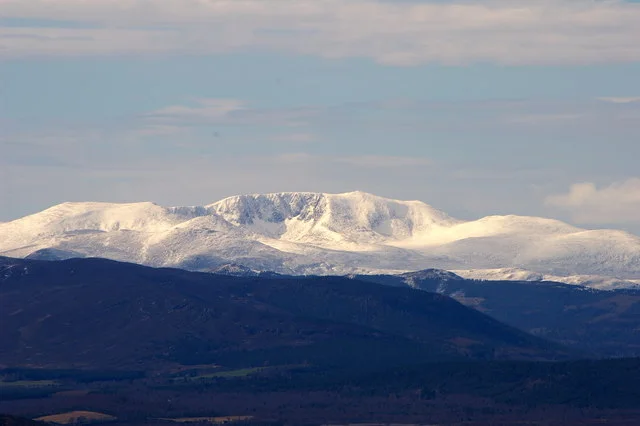
Of course, Balmoral is only one part of Royal Deeside. Beyond the estate lies a region of Highland villages, mountain landscapes, and communities with traditions of their own.
Nearby Ballater offers shops, cafes, and a welcoming base for exploring the surrounding countryside. Farther west, Braemar sits among the mountains of the Cairngorms, a village internationally associated with Highland gatherings and Scottish cultural traditions.
In winter, the region takes on a different character. The days are short. The mountains may be dusted with snow. Frost settles over the forests, and the River Dee continues its journey through the valley.
The weather can be unpredictable, and winter travel requires preparation. But for visitors who enjoy quieter landscapes, it can be a rewarding time to discover the Highlands.
There are walks to take, villages to explore, and opportunities to experience Scottish hospitality beyond the walls of the royal estate.
And perhaps that is worth remembering when planning a visit to Balmoral.
The castle is extraordinary. But the surrounding landscape and its communities are part of what made Victoria and Albert fall in love with the place.
The Gift of a Place to Return To
In December 1848, Queen Victoria gave Prince Albert two paintings. One showed a castle beside the River Dee. The other showed a mountain rising above the Highlands.
They were gifts of art, but they were also reminders of somewhere the couple had been happy.
Neither could have known how closely Balmoral would become entwined with their family’s history. Or how many generations would come to associate its granite towers with the private lives of Britain’s monarchs. Or that, nearly two centuries later, people from around the world would travel to the same Highland landscape, hoping to experience something of its beauty for themselves.
The castle has changed. The people have changed. Even the original building in Giles’s painting has disappeared, replaced by the Balmoral we recognize today.
But the appeal of the place remains.
Perhaps that is what makes the story of Victoria’s Christmas gift so enduring. Most of us understand the feeling.
There are places we visit once and never forget. Places we return to whenever we can. And places that, even from hundreds or thousands of miles away, remain part of our idea of home.
Sometimes the greatest gift isn’t something we can hold.
It’s somewhere we hope to return.
Visiting Balmoral at Christmas 2026
Balmoral’s festive calendar includes artisan markets, wreath-making workshops, evening castle experiences, and December celebrations. Advance booking may be required for individual events.
For official information, visit Balmoral Castle’s events calendar.
Visitors interested in staying on the estate can explore Balmoral’s holiday cottages.