

When Home Isn’t a Place You Can Take for Granted

Film Feature | CelticMFF Magazine — Christmas 2026
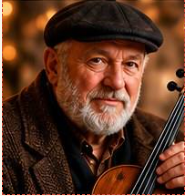
Liam Ó Mocháin’s Abode tells five very different stories about home. Behind them is a filmmaker who learned early that the word can mean belonging, uncertainty, family and absence all at once.
Christmas stories have a habit of treating home as the destination.
However complicated the journey becomes, someone eventually turns down the familiar road. A door opens. Lights glow in the windows. Whatever went wrong during the previous ninety minutes can finally be put right because everyone has made it home.
Abode begins from a less comfortable premise.
Home is not guaranteed.
For some people it is a house. For others it is another person. It can be somewhere we desperately want to return to, somewhere we need to escape, or simply somewhere we are allowed to stay.
And sometimes there isn’t one.
Irish writer and director Liam Ó Mocháin explores those possibilities through five separate stories in Abode, his 2025 anthology film. Its characters live in very different circumstances—from the street to comfortable houses—and their stories move between grief, family, love, comedy and the ordinary complications of sharing a life with other people.
One begins at Christmas.
Carol is homeless and grieving when an unexpected opportunity gives her and several other people sleeping rough something most Christmas films simply assume will be there: a place to gather.
There is warmth in what follows, but the question underneath it is harder.
What does “home for Christmas” mean when you have nowhere to go?
For Ó Mocháin, that question isn’t theoretical.
He has spoken openly about spending the first year and a half of his own life homeless, followed by years moving between foster homes before spending much of his childhood with one family in the west of Ireland.
It left him, he has said, with feelings of belonging and abandonment in equal measure.
Perhaps that is why Abode doesn’t offer one definition of home.
It offers five.
And perhaps that is closer to the truth.
Home can be the place that raised us without being the place where we were born. It can contain people we love and people from whom we need distance. It can be secure for years and disappear remarkably quickly.
For people who have always had one, home can seem almost architectural: walls, roof, address.
For someone who has lost one, left one, searched for one or never been certain of one, the word can carry considerably more weight.
Christmas has a way of making that weight heavier.
The season is filled with images of return: crowded airports, familiar kitchens, family tables and childhood bedrooms. They are comforting because they represent something we want to believe is permanent.
Life is less cooperative.
People leave. Families change. Relationships break. Housing disappears. Someone who once made a house feel like home is no longer there.
Abode doesn’t solve that.
It does something more interesting.
It asks us to notice.
And it does so without insisting that every story about home must be solemn.
Alongside its more difficult subjects, the film finds room for the absurdities of family life, complicated relationships and even a household appliance with a personality of its own. Ó Mocháin has described wanting the five stories to stand independently while contributing to something larger.
That balance matters.
Home is rarely one emotion. It can be comforting and exasperating, familiar and strange, a source of laughter one moment and heartbreak the next.
The film’s origins are personal, but its questions extend well beyond the filmmaker’s own experience.
Ó Mocháin originally considered exploring the subject through a documentary about the many different ways people live. Instead, he turned toward fictional stories inspired by experiences, observations and people whose lives might otherwise pass unnoticed.
It is an approach that makes room for a simple but uncomfortable recognition: we know remarkably little about what home means to the people around us.
The person sleeping outside a restaurant may have once had a family table of their own. The people living behind a beautiful front door may be carrying losses no passerby could imagine.
And someone who appears to have everything may still be searching for somewhere to belong.
Perhaps that is why the film belongs in a Christmas edition.
Not because every story ends beside a decorated tree, or because every family finds its way back together.
But because Christmas asks us to think about home, and Abode asks us to think about the people for whom that word is complicated.
We celebrate the journeys that bring people together. We remember the places we came from. We make room at tables and leave lights burning in windows.
Yet belonging cannot always be measured by a destination.
Sometimes home is the person who welcomes us.
Sometimes it is the family we find rather than the one we were born into.
Sometimes it is something we are still trying to build.
And sometimes, especially at Christmas, the kindest thing we can do is remember that not everyone has somewhere to return to.
Because before home can be a place we come back to, it must first be a place where we belong.
Watch the trailer
Official trailer for Abode (2025), from the filmmaker's YouTube channel.