The Road to the Celtic World Runs Through Japan
From a Scottish whisky apprentice in 1918 to Irish musicians in Tokyo today: a story of learning across borders and the communities that keep music alive.
By CelticMFF · September 27, 2026
Near closing time in Japan, you may hear a melody familiar in Scotland. It is the tune of “Auld Lang Syne,” but in Japan it has another life as Hotaru no Hikari, with Japanese lyrics and associations of its own. Generations have known it through schools and graduations, and the melody became familiar as music of departure and closing.
Today, Japanese musicians can compete in Tokyo for the chance to advance to the Fleadh Cheoil na hÉireann in Ireland.
A road to Scotland already existed
When Masataka Taketsuru arrived in Scotland in 1918, he was following a path that had been open for decades.
During Japan’s Meiji-era modernization, Western specialists were recruited to Japan while Japanese students and professionals traveled abroad to acquire expertise. Scotland was part of that exchange. Scottish engineer Henry Dyer arrived in Japan in the 1870s to lead the Imperial College of Engineering. Japanese chemist Jōkichi Takamine later studied in Glasgow before returning home.
Whisky was already known in Japan, too. Imported Scotch had developed a market, and Japanese manufacturers had attempted to reproduce Western spirits domestically. Some early domestic products sold as whisky were neutral spirit altered with flavorings rather than malt whisky produced by the Scottish process.
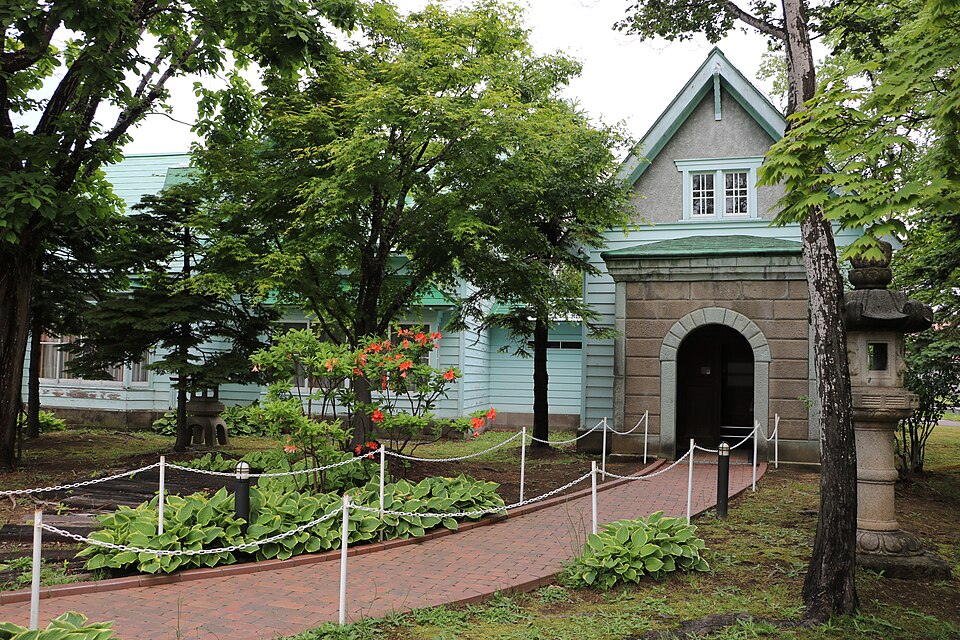
Settsu Shuzo wanted to learn how to make the real thing, and in 1918 it sent Taketsuru to Scotland. He came from a sake-brewing family and had studied brewing in Japan. In Glasgow he studied chemistry; at Scottish distilleries he learned production firsthand, filling notebooks with details of equipment, stills, distillation and production techniques that could be carried home.
He also met Jessie Roberta Cowan.
Rita, as she was known, married Taketsuru in January 1920 despite opposition from their families and left Scotland with him later that year. Back in Japan, the whisky venture that had sent him abroad promptly fell apart. Settsu Shuzo abandoned the project amid difficult economic conditions after the First World War.
Taketsuru eventually joined Shinjiro Torii and helped establish Yamazaki, Japan’s first malt whisky distillery, before leaving to create the company that became Nikka.
Rita was more than a romantic footnote to that story. She taught English and piano, and relationships she formed through teaching later helped Taketsuru find financial backing for his own whisky venture. The Japanese Consulate General in Edinburgh has described the couple as the “Mother and Father of Japanese Whisky.” Their story became familiar to a much wider Japanese audience decades later through the NHK drama Massan.
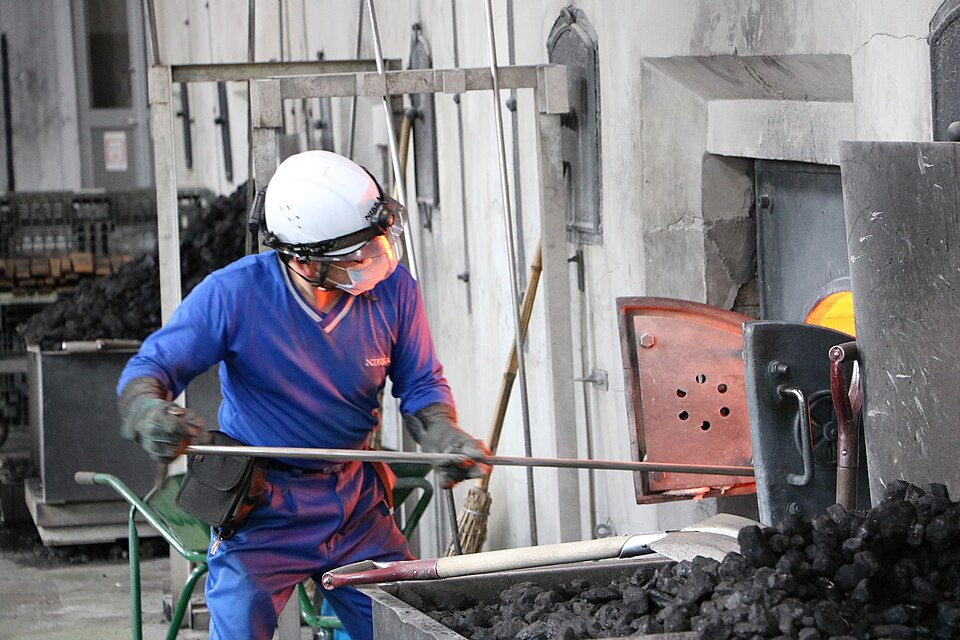
What Taketsuru brought home did not remain Scotch made somewhere else. Japanese distillers developed their own styles and built an industry. Then, in 1989, Nikka acquired Scotland’s Ben Nevis Distillery. Bowmore and Laphroaig are among the historic Scottish distilleries now within Japan’s Suntory group.
Irish music arrived by a very different route.
A flute in a record shop
Kozo Toyota grew up in Chiba and was drawn to Tokyo Disneyland’s Westernland, where the soundtrack included the fiddle-and-banjo sounds of the imagined American frontier. He has also recalled being fascinated by the musicians in Back to the Future Part III.
Toyota told WBUR reporter Amelia Mason that he came across a CD by the Irish traditional band while browsing in a music shop. The music connected with sounds he had already enjoyed, but this time there was a flute. Toyota had played trumpet, so a wind instrument seemed approachable in a way that suddenly taking up fiddle or banjo did not.
At Tokyo University of the Arts, where he studied ethnomusicology and music education, Toyota joined a university Irish-music club and met Hirofumi Nakamura. He later met guitarist Koji Nagao at a gig. Together they became O’Jizo, a Tokyo-based trio playing Irish traditional music, original compositions and contemporary arrangements.
Toyota became deeply involved in Japan’s Irish-music community. In 2016, he placed third in the slow-air whistle competition at the Fleadh Cheoil. He has also played Japanese traditional music in his local shrine’s kagura ensemble.
O’Jizo eventually took its music overseas, appearing at festivals in North America and at the Your Roots Are Showing music-industry conference in Dundalk, Ireland, in 2024.
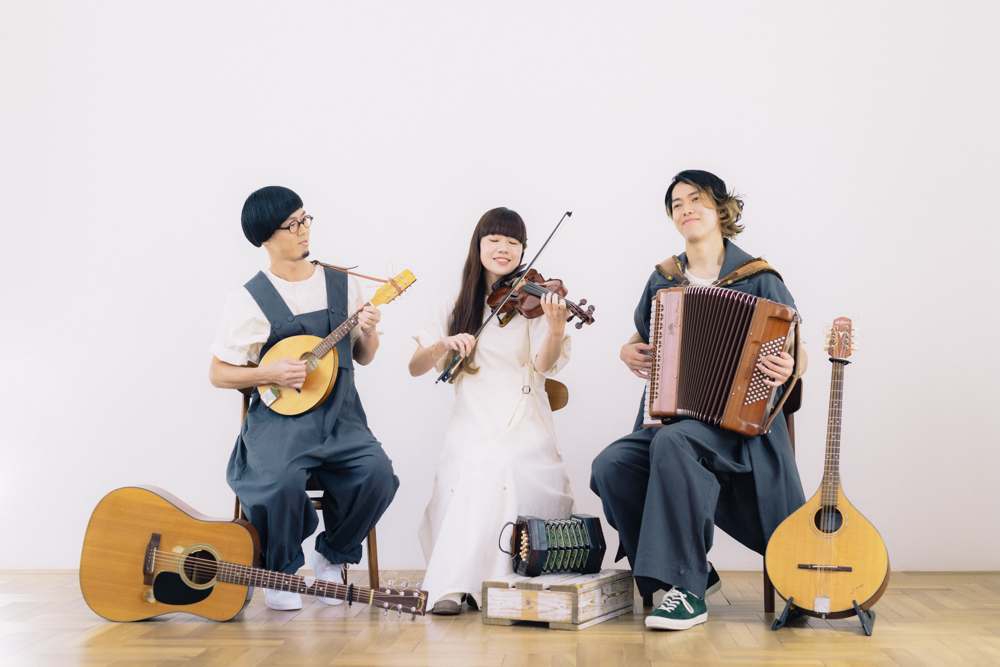
Nagao and Nakamura also play with fiddler and concertina player Yuka Nakafuji in tricolor, a trio formed in 2009. Their Irish-rooted music includes original compositions, heard here on its own terms from musicians making it in Japan.
Meet tricolor
Nakafuji plays fiddle and concertina, Nagao guitar, banjo and mandola, and Nakamura accordion and bouzouki. The band supplied the portrait above and specified the credit “Photo by Tatsuya Hirota.”
Hear tricolor
Watch their performance video “Lorient,” presented on tricolor's official video page.
Watch on YouTube · Explore their records · Find them in the Listening Room
A session requires someone to come back next week
In 2025, The Irish Times visited a Tokyo Irish-music session where roughly 20 Japanese musicians gathered on a weekday evening with fiddles, whistles, uilleann pipes, bodhráns and harp. Multiple sessions take place around Tokyo, alongside instruction in instruments, dance and sean-nós singing.
A concert can be imported. A recording can be bought. A touring musician can fly home. A session requires someone to come back next week.
Beginners have to learn tunes. Experienced players have to tolerate beginners long enough for them to become experienced players. Someone has to organize the gathering, teach the dance and start the university club. Eventually, yesterday’s beginner is teaching somebody else.
Boston Irish flute player Shannon Heaton was initially surprised by the idea of an Irish-music community in Japan herself. After befriending Japanese musicians and traveling there, she found something much less exotic: people became interested in the music, learned tunes, played together and traveled to Ireland, much as musicians in other Irish traditional-music communities do.
The distance is unusual. The way a musical community grows isn’t.
No single route explains the scene. Riverdance was one route; its appearances in Japan during the late 1990s brought Irish music and dance to Japanese audiences. Japanese university circles gave younger musicians a social way into the music. Touring artists, recordings and opportunities to travel to Ireland added other routes.
Toyota has his own explanation. He hears musical commonalities between Irish traditional music and Japanese folk traditions, including pentatonic scales. More important in his account is the emotional and narrative quality of the music, the ability of melody to carry a story. It’s one musician’s explanation for what he hears, rather than a theory about why an entire country likes Irish music.
Others arrived from somewhere else entirely. Yutaka Ohashi had played fiddle and mandolin in bluegrass bands for decades before discovering Irish music. He eventually traveled to County Clare for the Willie Clancy Summer School and, at 70, told The Irish Times that he was playing Irish sessions about three times a week.
The routes into the music vary. What matters after the introduction is whether there is somewhere to go next.
From Tokyo to the Fleadh
Féile Japan’s 2025 edition included music and dance competitions, workshops and céilís in Tokyo and Osaka. Visiting musicians Oisín Mac Diarmada and Samantha Harvey taught and performed, while the Toyota Céilí Band supplied music for dancing.
The competitions aren’t simply modeled after Ireland’s Fleadh Cheoil. Féile Japan is an official qualifying event for Fleadh Cheoil na hÉireann. Musicians can compete in Japan for the opportunity to advance to the Fleadh in Ireland; the 2025 qualifier document lists fiddle, Irish harp and newly composed tunes among the competition categories.
The infrastructure is now there: teachers, sessions, competitions, dancers, university clubs and musicians capable of teaching the people coming behind them.
The cultural traffic isn’t confined to music. Celtic Christmas has brought musicians and dancers to Tokyo. The 2026 program at Sumida Triphony Hall includes Altan, Solas, Dan Stacey and Inni-K, while Toyota is scheduled to host an afternoon program exploring sean-nós and regional styles of Irish music. The promoter lists Culture Ireland funding and backing from the Embassy of Ireland in Japan.
The exchange extends beyond music. The Embassy of Ireland in Japan organized the 2026 Irish Film Festival in Tokyo, with a program of contemporary Irish cinema.
There are also scholars studying Celtic languages and literature and cultural organizations producing their own events. None of this adds up to one homogeneous Japanese “Celtic scene,” nor should it. Irish traditional music, Scottish whisky, Celtic studies and contemporary Irish film have different histories and different communities.
A bigger Celtic map
Japan isn’t an undiscovered Celtic outpost. Japanese musicians, scholars, promoters and audiences have been doing this work for decades.
The surprise belongs to those of us who weren’t looking.
But ancestry isn’t the only way culture moves.
Sometimes people migrate. Sometimes they fall in love. Sometimes they go abroad to learn. Sometimes a record makes its way into the right shop.
Taketsuru went to Scotland to learn whisky and came home with Rita. Toyota found Dervish in a Japanese record shop and later performed with O’Jizo at an Irish music-industry conference. Neither story makes the origins of those traditions irrelevant. Both depend on people taking those origins seriously enough to learn from them.
A tradition can remain rooted somewhere without remaining confined there. Given enough time, the people who encounter it somewhere else become students, performers, teachers, organizers and, eventually, the ones welcoming the next beginner through the door.
The Celtic world has never been only a place on a map. It is also a network of people who keep showing up. And Japan, it turns out, is very much on that map.
Sources
- Nikka: Masataka and Rita Taketsuru
- WBUR: Kozo Toyota and O’Jizo
- CCÉ Japan: Féile Japan 2025
- Kotobank: Hotaru no Hikari
- Consulate-General of Japan in Edinburgh: Scottish connections
- University of Glasgow: Japan links
- Consulate-General of Japan in Edinburgh: Taketsuru and Rita
- Ben Nevis Distillery history
- Suntory Global Spirits brands
- JAPAN Forward: Kozo Toyota interview
- Kozo Toyota profile
- O’Jizo EPK
- The Irish Times: Irish music in Japan (2025)
- Comhaltas Japan: Féile Japan 2025 qualifier PDF
- Plankton: Celtic Christmas 2026
- Embassy of Ireland: Tokyo Irish Film Festival 2026
- Celtic Studies Society of Japan
- tricolor official site