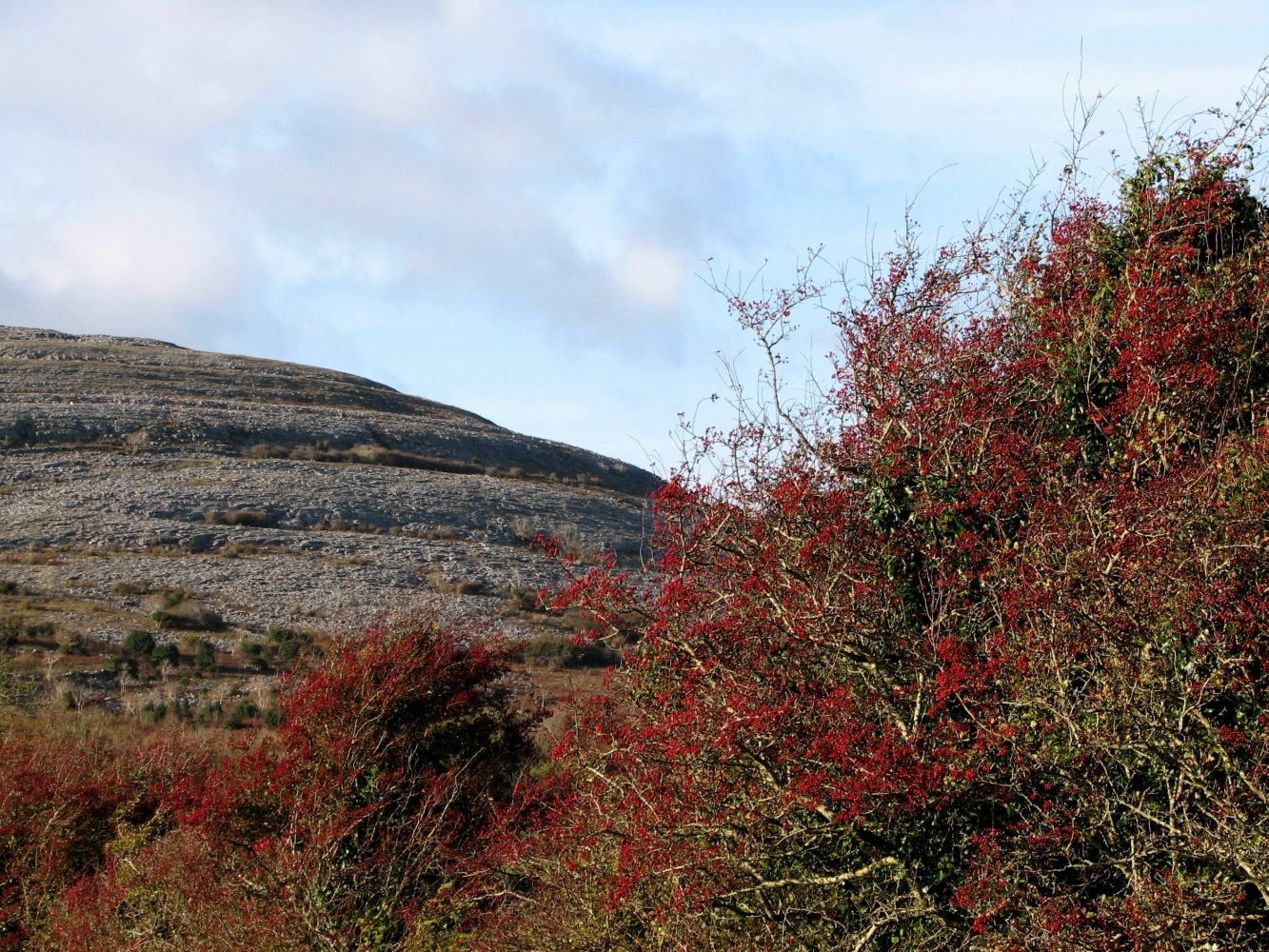
There is a moment in late October when the countryside seems to change overnight.
The fields are empty. The hedgerows have thinned. Darkness arrives before supper, and the last stubborn leaves rattle against windows that were open to the summer air only weeks before.
Winter is coming.
For generations in Ireland, this turning of the seasons has been marked by Samhain.
Pronounced roughly SOW-in, Samhain falls on November 1, traditionally regarded as the beginning of winter. Its celebrations, however, largely belong to the preceding evening, October 31, known in Irish as Oíche Shamhna.
It is one of four major seasonal markers in the traditional Irish calendar, alongside Imbolc, Bealtaine, and Lughnasa. Each reflects the rhythms of an agricultural world in which the seasons governed work, food, livestock, and the ordinary business of staying alive.
Samhain marked a particularly consequential change. The harvest was finished. The productive months were giving way to the difficult ones.
Yet the practical preparations for winter were only part of the story.
For this was also the night when the dead might come home.
According to Irish folk tradition, Halloween was a time when the souls of the departed could return to their former homes.
The belief was not necessarily one of terror. The dead were also family: parents, grandparents, husbands, wives, and children whose absence remained part of the household's story.
But the night carried dangers.
The countryside was believed to be unusually active with supernatural visitors. Fairy forts and certain trees were best avoided. Travelling alone was discouraged, and those who ventured out might carry objects believed to offer protection.
At home, families took precautions of their own.
Holy water could be sprinkled around the house, farm, and livestock. Small crosses made from wood or straw were placed above doorways to protect against misfortune in the coming year.
These customs survive in the collections of the National Museum of Ireland, which has documented the remarkable variety of beliefs and practices associated with the season.
Not every tradition reaches back unchanged to pre-Christian Ireland. Over centuries, older seasonal observances became intertwined with Christian celebrations, particularly All Saints' Day and All Souls' Day.
The result was a living tradition that continued to evolve.
And despite its reputation for ghosts and wandering spirits, Halloween was also one of the year's great opportunities for entertainment.
If the dead might return on Halloween, the living were equally interested in discovering what lay ahead.
Irish households celebrated with food, games, disguises, and a considerable amount of fortune-telling.
Apples were suspended from strings or floated in water for children to catch. Nuts were gathered for games. Young people attempted to discover the identity or characteristics of a future husband or wife.
Even an ordinary cabbage could become an instrument of prediction.
In one traditional game, a blindfolded participant pulled a cabbage from the ground. Its shape, size, and roots supposedly revealed something about a future spouse.
The possibilities for teasing were considerable.
Then there was báirín breac, the fruit-studded bread more commonly known as barmbrack.
Hidden inside the loaf were small objects, each carrying a prediction.
A ring meant marriage. A coin promised wealth. A rag foretold poverty. Other objects offered prospects that were considerably less encouraging.
Imagine the anticipation as the loaf was sliced, each person hoping for a favourable discovery.
The bread was eaten, the predictions debated, and the evening continued.
Whether anyone genuinely believed the future could be found in a slice of fruit bread was almost beside the point.
For one night, everyone could enjoy pretending that tomorrow's secrets were within reach.
Halloween also offered a welcome opportunity to behave badly.
Disguised visitors travelled between houses, sometimes wearing homemade masks designed to frighten their neighbours. In exchange for entertainment, they might receive food or treats.
Pranks were part of the festivities.
Doors were knocked upon and abandoned. Cabbages could become unlikely projectiles. Farm equipment and carts were sometimes moved or rearranged to the bewilderment of their owners.
The National Museum of Ireland records such mischief as part of the traditional celebrations.
It is not difficult to recognise the ancestry of modern Halloween in these activities.
The costumes have changed. The treats are more likely to come wrapped in plastic. Few householders today would appreciate discovering that someone had dismantled their cart.
But the combination of disguise, neighbourly visiting, laughter, and a little harmless disorder remains remarkably familiar.
Samhain occupies a significant place in Irish storytelling.
In medieval Irish literature, the season frequently provides the setting for extraordinary events, supernatural encounters, and journeys beyond the ordinary human world.
In later folklore, Halloween remained a night when familiar places could become unsettling after dark.
Modern descriptions often speak of a thinning veil between the living and the dead. The expression is evocative, although it should not be presented as a documented phrase from ancient Irish ritual.
The underlying idea, however, is deeply rooted in the stories: this is a time when ordinary boundaries seem less certain.
Perhaps that is why the season continues to fascinate.
Samhain offers room for remembrance without demanding solemnity, and for frightening stories without requiring anyone to believe them.
It accommodates the sacred and the ridiculous, the absent and the present, the old customs and the new.
Today, people observe the season in many different ways. Some celebrate Samhain as a spiritual occasion. Others embrace its cultural history. Many simply enjoy Halloween, with its costumes, lanterns, children, and sweets.
All are participating, in different ways, in a tradition that has travelled an extraordinary distance.
And beneath the modern celebrations, something familiar remains.
The harvest ends. The days grow short. Families gather indoors while the darkness settles outside.
Someone tells a story.
Someone remembers a person who used to sit beside the fire.
And the year turns once more.